

Brisbane Facts. If you are a student and looking for some fast facts and statistics about this wonderful city we call home then you have definitely come to the right place. Whether it is facts about our history, our people or our beautiful climate, below is a compilation of Brisbane facts for students.
Historical Facts of Brisbane

- Indigenous Australians are believed to have lived on the SE Queensland coast for 22,000 years prior to the white settlement.
- In 1859 Brisbane was declared a municipality – a city with its own local government. (BCC)
- The city was named after Sir Thomas Makdougall Brisbane, who was a noted astronomer and sixth Governor of New South Wales from 1821 to 1825. (BCC)
- King George Square was opened in 1975.
- John Petrie, a notable builder and stonemason, was unanimously elected first mayor.
- Building City Hall was a major undertaking in the 1920s. It took 10 years to build at a cost of around 980,000 pounds. (BCC)
- When the City Hall offices opened for business on 3 January 1928 it was ranked as the second largest construction of its time, only outdone by the Sydney Harbour Bridge. (BCC)
- A time capsule containing messages and photos from 2012 was placed inside City Hall’s Main Auditorium in April 2013. It will be re-opened in 2059 to coincide with the 200 year anniversary of the declaration of the municipality of Brisbane. (BCC)
- When the City Hall Clock Tower was built, it was the largest public clock and most modern time-keeping piece in Australia.(BCC)
- The City Hall Clock chimes consist of four bells weighing over three tonnes that chime every 15 minutes and a 4.3 tonne striking bell that marks the hour. (BCC)
- The clock tower is 92 metres high, with an observation platform at 76 metres. (BCC)
- The first recorded use of electricity for public purposes in Australia took place in Brisbane in 1882.
- Over 150 signatures from World War II (WWII) veterans were uncovered as Brisbane City Council restored the basement of City Hall. (BCC)
Population Facts for Brisbane
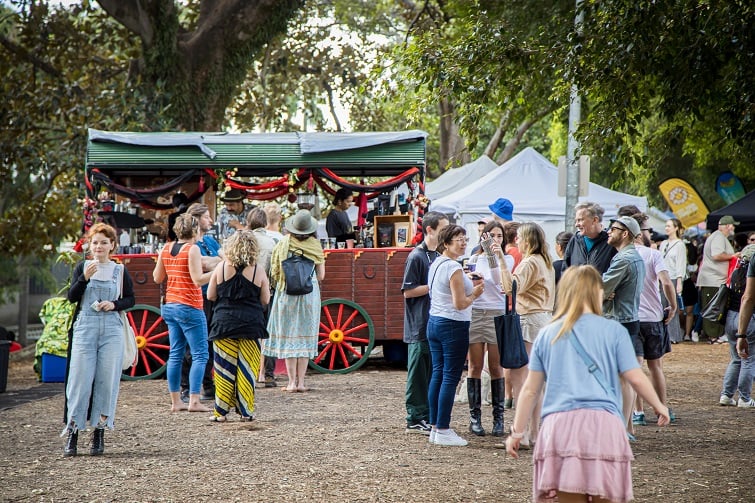
- The current population of Brisbane in 2023 is 2,568,927. (Brisbane City Council)
- The population of Brisbane accounts for 19% of the national population. (Population Australia)
- The size of Brisbane is 15,826 km². (Population Australia)
- The medium age of people living in Brisbane is 36.5 (Australian Beaureu of Statistics)
- Greater Brisbane had a higher proportion of its population aged 20 to 44 years (36%) than the rest of Queensland (31%), reflecting the pattern of young adults moving to capital cities for work and education purposes. (Australian Beaureu of Statistics)
- In contrast, Brisbane had a lower proportion aged 55 years and over (25%) than the rest of the state (32%). (Australian Beaureu of Statistics)
- Brisbane is the third largest city in Australia with 2.5 million people. Greater Sydney and Melbourne are both larger. (Australian Beaureu of Statistics)
- According to the 2021 Census, the average household in Brisbane is made up of 2.5 persons. (BCC)
- 36% of Brisbane residents were born outside of Australia. (BCC)
- 28% of the residents who live in Brisbane speak a language other than English at home. (BCC)
Climate Facts for Brisbane

- Brisbane has more sunny days per year than any other Australian capital city. (Population Australia)
- The average daily temperature in Brisbane is a balmy 26.9 degrees. (BCC)
- 17.2 degrees is the average daily low temperature in Brisbane. (BCC)
- In Brisbane the average humidity ranges from 50 per cent in winter to 65 – 70 per cent through the months of January, February and March. (Australia)
- On average February is the most humid month and September is the least humid. (Australia)
- During summer, average temperatures range from 21 – 29.8°C (69.8 – 85.6°F) and the city has its highest rainfall. (Australia)
- The average rainfall during summer in Brisbane is 426.6 mm. (Australia)
- Brisbane’s weather in winter is generally dry and mild with mean temperatures between 11 – 21°C. (Australia)
- The spring climate is similar to autumn, with average temperatures between 15 – 25°C. (Australia)
- Autumn signals the end of the hot summer when average temperatures drop between 15 – 25°C. (Australia)
Economic Facts for Brisbane

- The average weekly earnings for someone in Brisbane at the last consensus was $1,250. (Australian Beaureu of Statistics)
- Brisbane region’s Gross Regional Product (GRP) was estimated at$181 billion in 2020-21. (BCC)
- There were more than 136,000 registered businesses within Brisbane in 2021-22. (BCC)
- As of March 2022, Brisbane had a labour force of approximately 762,000 people. (BCC)
- As of June 2021, 69% of Brisbane’s population were working age (between 15-64 years).(BCC)
Some Other Interesting Facts of Brisbane

- Brisbane covers 1342.7 km2 across 190 mainland suburbs, plus additional islands and localities in Moreton Bay. (BCC)
- The Brisbane River is 114km in length. (BCC)
- The famous Story Bridge, which opened in 1940 and spans 1,072m long also stands 74m high and is heritage listed.
- Brisbane is home to over 800 different species of wildlife. (BCC)
- Brisbane has over 2,500 species of native plants. (BCC)
- There are over 2000 natural parks and urban areas in Brisbane. (BCC)
If you want to know a little bit more about Brisbane you might also like to read the following articles:
Secret Brisbane – 5 Places or Activities You Have Never Heard About!


Join the conversation