
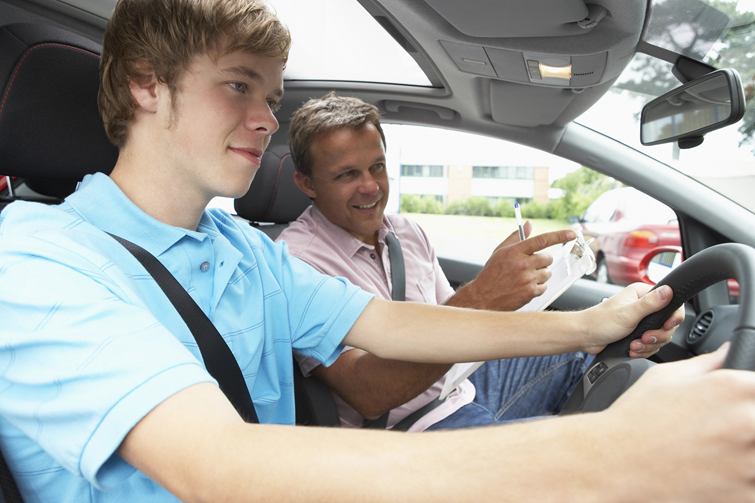
The day your child turns sixteen and comes home waving a fresh L plate is a strange mix of pride and quiet panic. Somewhere between booking that first lesson and working out who is brave enough to ride shotgun, one question tends to get skipped entirely.
Is the car actually covered while they are driving it?
Most Brisbane families never ask because the answer feels obvious. We already insure the car, so surely a teen on their Ls is fine. Usually that assumption holds up. Sometimes it fails, and the gap between those two outcomes can run into thousands of dollars at exactly the moment nobody needs another problem.
So here is the plain version of what Queensland parents should check, what it costs and where the traps sit.
First, the licensing timeline you are working with
Understanding the runway helps because the exposure period is longer than people expect.
Queensland teens can apply at sixteen once they have passed PrepL or the written road rules test. PrepL opens up from fifteen years and eleven months, takes roughly four to six hours and finishes with a thirty-question test requiring ninety per cent to pass. From there, the licence stays valid for three years.
Then comes the part that matters for cover. Under-25 learners must log 100 hours of supervised driving experience before sitting a practical test, with all hours recorded in a logbook.
One hundred hours.
Sit with that number for a second. That is a hundred hours of a brand-new driver operating your vehicle, mostly on suburban Brisbane streets and mostly with a parent gripping the door handle.
Nobody would leave that unchecked if they framed it that way, yet very few of us ring our insurer about it.
Are learners covered? Usually, with conditions
Across most Australian motor policies, the general position runs as follows, although wording varies and yours is the one that counts.
Comprehensive and third party products typically cover any person driving with the owner’s permission, provided they are properly licensed. An L counts as a valid licence, so a supervised teen at the wheel is normally covered. Their L plates do not void anything.
Three conditions sit around that, and all three matter.
Supervision must be legal. Queensland requires an appropriately licensed supervisor to sit beside the learner. Drive unsupervised and the teen is unlicensed for that trip, which puts the claim on very shaky ground.
The vehicle must be used as declared. A car insured for private use that starts doing delivery shifts is a different risk.
Disclosure must be accurate. That one is the big one, and it deserves its own section.
Tell your insurer about the learner
Plenty of parents hold off on this, reasoning that a supervised learner is barely driving and the premium will jump. That instinct is understandable and usually a mistake.
Most insurers ask for the age of the youngest person who regularly drives the car. Once your teen starts logging hours in it, they meet that description.
Leaving them off the policy is a disclosure problem, and disclosure problems surface at claim time rather than at renewal. That is the worst possible sequence.
Ringing to add them costs nothing and takes ten minutes. Even where the premium moves, you have swapped an unknown risk for a known cost.
While you have someone on the phone, ask the two questions parents most often miss:
- Does an age-based or inexperienced-driver excess apply, and if so, how much?
- Does that excess apply on top of the standard excess, or instead of it?
The excess is where the real money hides
Premiums get all the attention, but for families with a young driver, the excess usually matters more.
Many insurers apply an additional excess when the driver at fault is under a certain age or has been licensed for less than two years. Those figures can run to several hundred or a few thousand dollars, and they may be added to the basic excess.
A prang that would normally cost you $800 out of pocket can cost considerably more when a teen is driving.
There is also a lever running the other way. Insurers generally let you raise your basic excess to lower the annual premium. This swaps a smaller regular payment for a bigger bill if you claim.
Households with a learner should think carefully before pulling that lever because the learning years are precisely when a high excess could bite hardest.
Work out the amount you could comfortably find at short notice. Set the excess there, not at whatever produces the prettiest premium.
There is no special learner policy, and that is fine
Parents often go looking for a dedicated young-driver product, and it does not really exist in the Australian market.
NRMA Insurance states the position openly on its under-25 page, confirming it offers no policy exclusively for young drivers or P-platers. Drivers of any age take up the same policies as everyone else. Other insurers work in much the same way.
What this means practically is that your decision is the ordinary one, made with a sharper pencil.
Comprehensive insurance covers your own car as well as damage you cause to other people’s cars and property.
Third party property insurance covers damage caused to other people’s cars and property. It is far cheaper but leaves your own vehicle unprotected.
For an older second car worth only a modest sum, the cheaper option may stack up sensibly. For anything newer, or anything the household genuinely relies on, comprehensive cover will usually earn its cost.
Compulsory Third Party insurance sits outside all of this and is not optional. In Queensland, it comes bundled into your registration, so provided the car is registered, you already have it. It covers injuries to people, not damage to vehicles.
Own car or share the family one?
This decision drives the insurance question more than any other, so it is worth thinking through properly.
Sharing one household car keeps things simple. There is one policy, one premium, one set of paperwork, and your teen learns in a vehicle that is usually newer and safer than anything they could afford themselves.
Buying them their own car separates the risk. If they damage it, your primary vehicle stays on the road and your main policy stays untouched. The trade-off is a second registration, a second premium and, often, an older and less safe car.
Whichever way you lean, a few things are worth weighing:
- Safety rating over sentiment. A slightly newer car with electronic stability control and decent crash performance beats a cheap runabout with neither.
- Repair cost, not just purchase price. Some bargain models carry surprisingly expensive panels and sensors.
- Who is on the registration and policy. Ownership and insurance should sit with whoever genuinely uses the car most.
- Parking arrangements. Where a car sleeps at night affects both the premium and theft risk.
- Total running cost. Registration, fuel, servicing and tyres often outweigh the premium itself.
Sharing the cost with your teen
Many Brisbane families ask their teen to contribute, which can work well when the expectation is set early and clearly.
Part-time work is how most teenagers fund it, and the logistics can be circular. Our teens often need transport to reach a job, and they need the job to help pay for the transport.
Brisbane Kids has a useful guide to where teenagers can start looking for work locally, including how bus access shapes which suburbs are realistic.
A workable split many families land on is for the parents to carry the premium while the teen covers fuel and contributes towards the excess if they cause an incident.
That keeps the insurance decision with the person signing the contract while still attaching a real consequence to how the car is driven.
Lessons and cover work together
Insurers price according to risk, and a genuinely well-taught driver represents less of it over time. Structured lessons alongside your own supervised hours are the practical way to get there.
Most families use a mix, completing the bulk of the hours themselves and booking professional lessons at key points.
The Brisbane Kids guide to driving schools across Brisbane explains how to check a trainer’s accreditation and why the cheapest option is not automatically the right one.
Some insurers also offer discounts tied to completed driver-education programs. Ask when you call because these discounts are rarely advertised prominently.
Before the first lesson: a short checklist
- Ring your insurer and add the learner as a listed driver.
- Ask what additional excess applies to young or newly licensed drivers and whether it stacks with the standard excess.
- Confirm that your excess is an amount you could actually pay tomorrow.
- Check that the car’s registration and CTP insurance are current.
- Confirm that the supervising adult meets Queensland’s requirements for every logged hour.
- Ask whether any driver-education discount is available.
- Diarise a policy review for the day your teen passes their practical test because moving onto P plates changes the risk profile again.
Final word
None of this is the exciting part of watching your teen learn. What matters is the first time they reverse-park without commentary or drive themselves to training while you stay home.
Getting the insurance sorted properly is simply what lets you enjoy those moments without the background hum of what if?
A phone call, a couple of direct questions and an honest answer about who is driving the car. That is genuinely most of it.
Then hand over the keys, take a breath and try not to grab anything.
This sponsored article was created in partnership with NRMA Insurance and provides general information only. Always read the relevant Product Disclosure Statement and Target Market Determination before deciding whether a product is right for you.



Join the conversation