
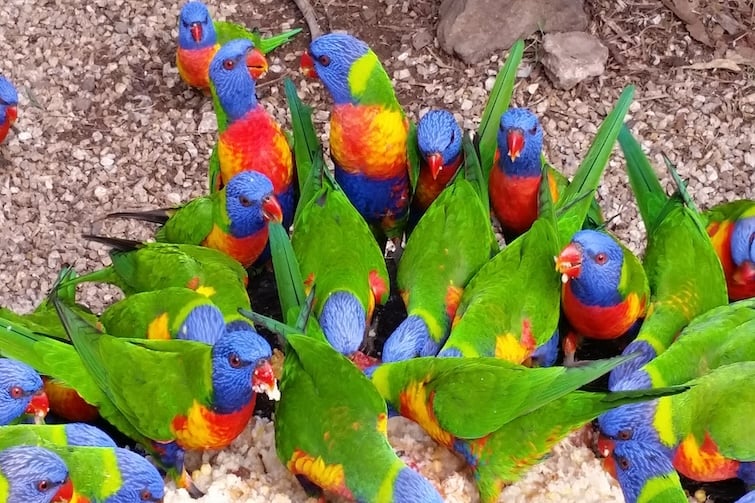
Australia is full of unique, beautiful and colourful birds, and the rainbow lorikeet is no exception. This iconic bird is often heard before it is seen, thanks to its noisy chatter and looks striking as it darts about the treetops.
Discover all there is to know about rainbow lorikeets and what makes them the wonderful bird they are today.
Fun Rainbow Lorikeet Facts
- Male and female rainbow lorikeets look the same
- Nesting occurs in the hollow of old trees
- The female lorikeet will lay eggs (usually two eggs per clutch)
- She will sit on the eggs until they hatch
- A rainbow lorikeet egg takes about 23 days to hatch
- A baby rainbow lorikeet is known as a chick
- A baby lorikeet will live in the nest until it can fly (usually after about 45 days)
- A rainbow lorikeet can grow up to 32cm tall
- A group of rainbow lorikeets is known as a ‘flock’
- In the wild, a rainbow lorikeet can live between 10-20 years.
- Rainbow lorikeets are primarily herbivores, mainly eating nectar, pollen, seeds and fruits
- Rainbow lorikeets can hang upside down to reach their food
- They have a special brush-tipped tongue which helps them get the nectar
- Rainbow lorikeets are known for their very loud, screeching calls
- They can fly very quickly between trees and shrubs looking for food
What Does a Rainbow Lorikeet Look Like?
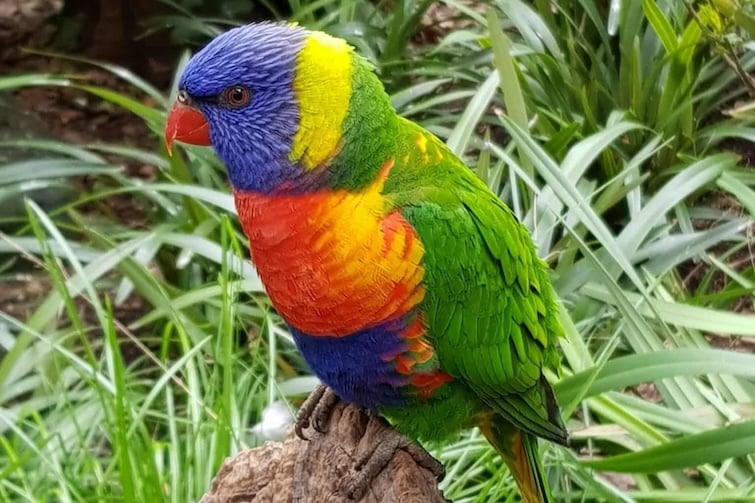
If you live in, or have visited Australia, chances are you would have seen or heard a rainbow lorikeet.
Noted as one of Australia’s most colourful birds, the rainbow lorikeet is unique in that both the male and female birds look the same.
Starting at the top, their head is a blue/purple colour with a curved, orange-red beak, which is used for tearing fruits and berries, preparing nesting hollows and gripping onto branches as they move about the trees.
In order to lick the nectar from flower blossoms, the lorikeet has a thick, rounded bristle-brush tongue, which is quite a sight to see.
The chest of a rainbow lorikeet is orange/yellow, while their belly is blue/purple and the wings, tail and back are green. The variety of vibrant colours adorning this beautiful bird contributes to their name – the rainbow lorikeet.
Sharp claws and two pairs of opposable toes makes gripping branches easy. They can even hang upside down to reach their food thanks to these strong feet and legs.
Where Do Rainbow Lorikeets Live?
The rainbow lorikeet has a wide distribution, meaning it is found in large areas of Australia. They can be found living in a variety of environments in coastal regions of eastern and northern Australia. Extending from South Australia, through Victoria, NSW, Queensland and into the top of Northern Territory and Western Australia, rainbow lorikeets live in areas such as woodlands, rainforests and other places with lots of trees.
Interestingly, there is also a substantial population of rainbow lorikeets in Perth. It is thought several lorikeets escaped or were released from an aviary back in the 1960’s and have now multiplied and are considered a pest to this area.
Rainbow lorikeets can also be found in Indonesia, Papua New Guinea, the Solomon Islands, New Caledonia and Vanuatu.
Due to their wide-spread distribution and their ability to thrive in urban environments, the conservation status of the rainbow lorikeet is listed as a species of ‘least concern.’ This means they are not endangered.
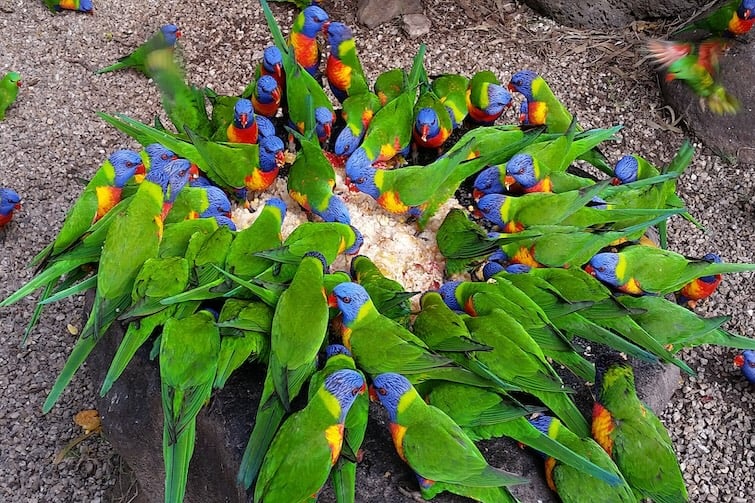
What Do Rainbow Lorikeets Eat?
The rainbow lorikeet is generally considered a herbivore, which means they primarily eat plants and seeds, though they have been known to eat meat at times.
The diet of a lorikeet usually consists of nectar, pollen, seeds, and fruits. Flitting from tree to tree and plant to plant, these colourful birds, use their special tongue to get the nectar from flowers. Occasionally they will also eat soft berries, fruits and even insects.
Apart from using nectar and pollen as a food source, the rainbow lorikeet also assists in pollination, as pollen sticks to their beak and is transferred from flower to flower as they move about eating.
Lifecycle of a Rainbow Lorikeet
When it is time to breed, both the male and female lorikeets get busy preparing the nest, usually high up in a hollow limb of a tree. They will peck and chew up dead bits of wood for the nest, where the female will lay two eggs. Sometimes though, she may lay one or three eggs.
Nesting season occurs between August to January in south-east Australia, while in Queensland, and in the north of Australia, nesting occurs year-round.
The mother lorikeet will then incubate (sit on) the eggs until they hatch about 23 days later. While the female lorikeet is sitting on the eggs, the male lorikeet will feed her with regurgitated food, to keep her healthy.
Once hatched, both the male and female lorikeet will feed the young, until they are ready to fly, after about 45 days.
While it is hard to tell, it is thought a rainbow lorikeet in the wild can live for 10-20 years, though many factors including diet, environment, disease and habitat loss.

Where to Find Rainbow Lorikeets in Brisbane
Rainbow Lorikeets can be found in the wild all-around Brisbane usually where there are plenty of trees and flowering plants. You may even see them in your backyard!
If you can’t seem to find any, then head to one of the following places. You can even attend special feeding sessions at many of the venues – but be warned – it can get very noisy!
- Ipswich Nature Centre
- Australia Zoo
- Maleny Botanic Gardens and Bird World
- Currumbin Wildlife Sanctuary (feeding sessions)
- Paradise Country (feeding sessions)
- Thunderbird Park (feeding sessions)
Other Animal Resources for Kids
If you loved learning about rainbow lorikeets, then perhaps
check out these other cool Animal Facts for Kids:
If you can’t get enough of all things animal then why not visit some of Brisbane’s Best Animal Farms. You would be surprised what cute, cuddly and quirky animals you will encounter at these farms and sanctuaries.


Join the conversation