
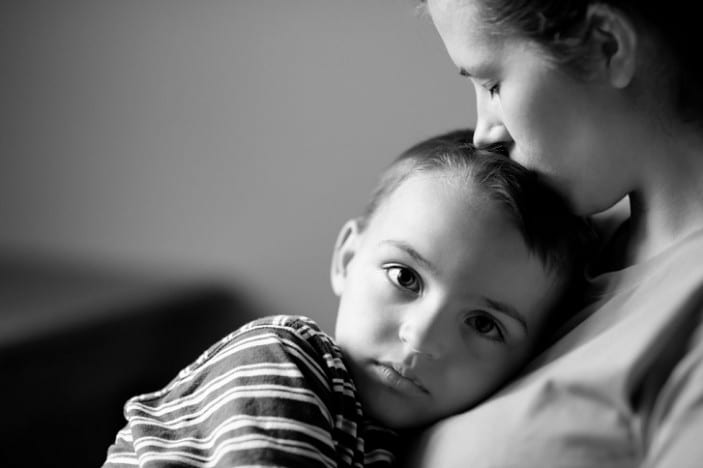
8.40am – A 5 year old boy runs across the school playground, ahead of his mum. She yells out “Ryan, PLEASE come and put your jumper on”. He reluctantly stops and she tucks him into his coat, whispering in his ear. He struggles and clearly hates putting the jumper on. His big sister holds onto the mother’s jacket, hanging back.
8.50am – The same Mum walks into her son’s classroom, helps him put his bag away, takes out 2 lunch boxes and reminds him that one is for morning tea, one is for lunch. She pulls out the sight words list, and goes through it with him, in the corner of the room. She then gives him a hug, and walks over to the teacher. Chatting for at least 5 minutes with the teacher, with a serious face on.
3.10pm – That Mum is again talking to the boy’s teacher, hovering, looking serious, reminding him to put his warm coat on, hugging him so tightly he complains…
I am a Helicopter Parent. I don’t want to be. Until 23 March 2013, I wasn’t.
My natural parenting style is way more relaxed — turn on the sprinkler in the back yard and let the kids run through it, eating watermelon and making a huge mud puddle type parenting. Looking back on it, that is how I grew up. How I desperately want MY kids to grow up.
But now I can’t do that.
On 23 March, 2013, my son Ryan had a tonic clonic seizure. It was his 4th birthday. I will never forget finding him lying on the lounge room floor, surrounded by his Lego, thinking he was choking. Banging him on the back, calling 000, sitting on our front steps, holding his limp and barely breathing body …. just thinking “a boy can’t die on his birthday. It’s not right”.
From that day onwards, our Epilepsy journey began. Ryan has tonic clonic seizures (they used to be called grand mal), as well as myoclonic, atonic and the occasional absence seizure. But you wouldn’t know any of that to look at him … if you didn’t know him and our journey. He appears to be a normal (slightly chubby) 5 year old boy.

This is life or death and even if it wasn’t it is none of your business.
Instead my husband and I take turns each night to sleep on his floor – because Ryan’s night time seizures carry a significant risk of death (Google SUDEP – it’s heartbreaking).
We constantly monitor and limit his food intake – because one of the medications he is on inhibits his “feeling full” sensation – so he just keeps eating if you let him.
We are paranoid about coughs and colds – because any slight illness is a huge seizure trigger for anyone with Epilepsy. It creates metabolic imbalances, so they don’t absorb their medication at the same rate. A head cold put Ryan into Status Epilepticus last year (a state where their body doesn’t recover from one seizure, before having the next one). Nearly 3 weeks in hospital.
Ryan struggles with short term memory loss – he can’t focus on things for long enough to remember them. He cannot remember a child’s name, so he doesn’t make friends, and can’t give detailed answers in class, when asked a question. He struggles to remember his word lists, and is exhausted by the afternoon.
I had to buy a handbag (I hate bags – try to go with just phone and purse), to carry a pack with Ryan’s emergency rescue medications, that must be administered if he has a seizure of 5 minutes or longer. His teacher has an identical kit, that must go with him at all times.
Ryan’s big sister (age 8) has witnessed so many seizures, ambulance calls, Emergency Department trips and hospital in-stays that she is scared to be left alone with him (even for a moment), in case he “gets wobbly”.

And yet none of this is visible, to the casual observer.
We are so quick to label, to gossip, to criticise other people’s parenting styles. Without knowing anything about their circumstances. If you could walk a mile in my shoes (including the psych appointments for the Traumatic Stress Disorder that I am now suffering from, since Ryan’s Epilepsy diagnosis), you might understand that there is ALWAYS more to the story than you see. AND even if it wasn’t life and death, as long as a child is safe then parenting styles of individuals are not for you to discuss at school pick up, stare at in the playground or gossip about with friends.
So next time you see a parent in the park, schoolyard or at playgroup – just try to be friends. No agendas, no judgements… we are all walking this parenting journey, and no-one knows what anyone else’s journey is REALLY like.
For support and help with an Epilepsy journey, I can highly recommend Epilepsy Queensland – www.epilepsyqueensland.com.au
Written by a Mum who just wishes her son to be safe.

Slinky Malinky
All sounds very familiar. In coming to terms with my PTSD ( after watching my then 5 yr old get hit by a van travelling 70 kms/h through a red light), I have realised how much it has affected my parenting. When you have regular day dreams about burying your kids, standing by their grave, feeling breathless ,even though you know its not real, you can’t NOT become a helicopter parent. From a distance you might seem highly organised, busy and in control, but behind the hyper vigilance is a bigger story. Lets all just give each other a break.
Robyn
It’s so true that we judge people /situations based on what we see. I only ever leave the house on a ‘good day’ so people only see the ‘with it’ person not the mother of two suffering with PND. Please don’t judge anyone, friends or strangers FULL STOP
dee
I cannot imagine. You are incredible. Thank you for the reminder not to judge.
Melanie Croke
This brought me to instant tears.
My son at 3 weeks stopped breathing while being held by my mum. I revived him while mum collapsed and dad calles the ambos…. an undiagnosed whole in his tiny heart. At 3 a febrile covulsion yet again saw me being my son back to me. At 5 he has been diagnosed with autism and an intellectual disability. I can feel all the other parents staring and talking behind our back, did i mention he also has a significant speech delay due to partial hearing loss?? He finds it hard to make friends and “fit in.” He just wants to be like every other kid.
Just wish the other parents would take the time to get to know us and understand why i do the things i do; why im so protective of my son and daughter. They are my everything. My world.
Jannine
Hi Melanie,
Our daughter was diagnosed at a very early age with an intellectual disability. Along with the disability came behavioural problems (mainly with me), so going anywhere was very hard because if she got anxious all hell broke loose! Believe me I cried buckets of tears worrying about her future. Primary school was the hardest – a private girl’s school where she didn’t fit in – ANYWHERE! We were forced to find another high school for her and it was the best thing to happen for all of us. She blossomed because she finally fitted in somewhere and was able to learn at her own pace. She was good at swimming and eventually went on to represent Australia and win many medals and awards. She loved her swimming and finally retired on her own terms “I’m over it!” 🙂 She is now almost 27, has a job and through the help of many people is pretty much independent.
Your son will be okay – find something that he loves doing, nurture his talents and most importantly find a school that caters to his needs and abilities. All the best for the future xx
Claire
I can’t help judging. As hard as I try not to, I can’t help it. While I’m pretty laid back with most things, I am pretty strict when it comes to the health and safety of my children. When I see parents who leave their Prep kids to wander around a shopping centre until the parents finish work and pick them up, or don’t bother putting their toddlers in car seats, or routinely leave their young children at home alone, I try not to judge, but I can’t help that I do.
Jeanette Jessamy Fornier
My brother has epilepsy as did my uncle, they grew out of it as adults, eventually. I really hope your son does too. My youngest is Autistic so I am a helicopter parents of many years (he is 9) for similar reasons. I have no answers, just wanted you to know you are far from alone <3
claire
I sympathise. My youngest son was in ICU after birth and we thought he might die. He didn’t. At 20 months he had 2 febrile convulsions. As the hospital told us, they are ‘harmless’ but holding your baby’s blue, jerking body for what seems an eternity doesn’t feel so harmless. He had two in one day and we were stuck in the side of a freeway for the first one, had no idea what was happening. It took 40 minutes for the ambulance to arrive. We thought he might die, he didn’t. I am forever changed by those two experinces. Reading this all the old emotions have bubbled to the surface and I am crying. I hope as your son grows older he grows out of them. My cousin has lived with epilepsy since being a teenager and it has been tough for him. Thanks for writing this. I hover and overprotect too, but in that one split second your life tips upside down and it never quite goes back the way it was. Xxx
Den
What a hard journey for you all. Life changing in every which way. My heart goes out to you and yes, the last thing you need is judgment. What you desperately need is support.
Much love your way…
S J
I read an interesting article recently about a mother in America who had great success with medicinal marijuana for her daughter who had severe epilepsy. But here’s the catch…the marijuana that she needed specifically had NO THC in it (the ingredient that makes you high). The low/no THC marijuana was by far the most effective treatment, and she just put a couple of drops of liquid under her daughters tongue every day. She had trouble sourcing the low THC stuff because, of course, most people want to grow marijuana to get high. I heard of a NZ couple who recently travelled to America to pursue treatment options with medicinal marijuana for their epileptic daughter. I know this may seem like a long shot but if you are at your wits end then it may at least be worth researching further? I hope this helps….
Leisa
Thank you for putting my own clouded thoughts into perspective. I left school this morning feeling very judged when all I want to do is keep my little girl safe when she suffers from extreme allergies. My sister once told me that if I am not my kids’ advocate, no one will be. This parenting gig is tough and it takes a village to raise a child. Sometimes a smile can make such a difference to someone’s day. Thank you for taking the time to write this and making a difference to mine.
Emma
It’s not hard to be kind. Just throw that mum a smile. We are all in this together x
kiwisarah
thank you so much for sharing, you are a great mumma bear and your son can be proud to call you his mum… stories like this go a long way to making us all stop and look at ourselves and become better parents, even if it’s just giving our children that extra hug for no reason 🙂 Kia Kaha mumma, which means stay strong x
Jutta
Our son was 14 months old when he had his first seizure. Not that we realised at the time what it was. He went limp and blue and seemed to stop breathing. Many months, tests and medications later the initial diagnosis of an inoperable brain tumor was downgraded to only a lesion which causes his epilepsy. Our daughter was eight when she had her first absence seizure. After initially being branded neurotic parents who imagined their firstborn to also experience seizures an EEG clearly showed numerous absences. Fast forward a few years and many different medications, countless bloodtests and doctor and hospital visits, we sort of got used to having two children with serious health issues. We did not know any other way. Both kids had similar conditions yet different needs, one very bright, the other with learning and memory problems. Every year we would meet with teachers to try to explain their strengths and weaknesses. Some tried to understand and treat them as individuals, not easy in a class of thirty or so students. As the kids got older the roller coaster continued. Our daughter’s seizures changed, both in type, frequency and severity. We got better in coping, advocating on their behalf, communicating with doctors. All along the kids just wanted “to be normal”, fit in, be like their friends. So we never wrapped them in cotton wool, just became ‘helicopter parents’… Fast forward another few years … both our children finished year 12, are now happily married and successful in their professions. Both are handling their health issues in their own unique ways, just as they were growing up – similar yet different. Throughout our journey I have learned to try not to judge others (not always succesfully I admit) and to be grateful that things are/were not worse. The assistance received from The Epilepsy Association during those early years was invaluable. Good luck to all the mums and dads who need to “hover” over their children little bit more or a lot.
snuck
My son has asthma so some days I’m talking to the teacher about that, he’s also got sensory issues and some days he struggles with the feel of his clothes (season change joy) or noises, this is significantly worse if he hasn’t had a good sleep and I might be helping him to separate himself from triggers that could overwhelm him. He has a condition that makes planning and organising his thoughts difficult and this means he needs support in a busy environment – if something has moved or the routine changes he needs someone to explain that to him, walking through a crowd of big kids might be too much some days etc.
I just look like a hover parent. The alternative is I stand back and my son gets overwhelmed and lashes out. It’s happened, and there’s no winners in that situation.
Hermione
Wow. This could be my story, but mine is my 6 year old daughter. Everything else is soooo much like what the last 10 months have been since her epilepsy diagnosis. Brought tears to my eyes.